 Contact Us
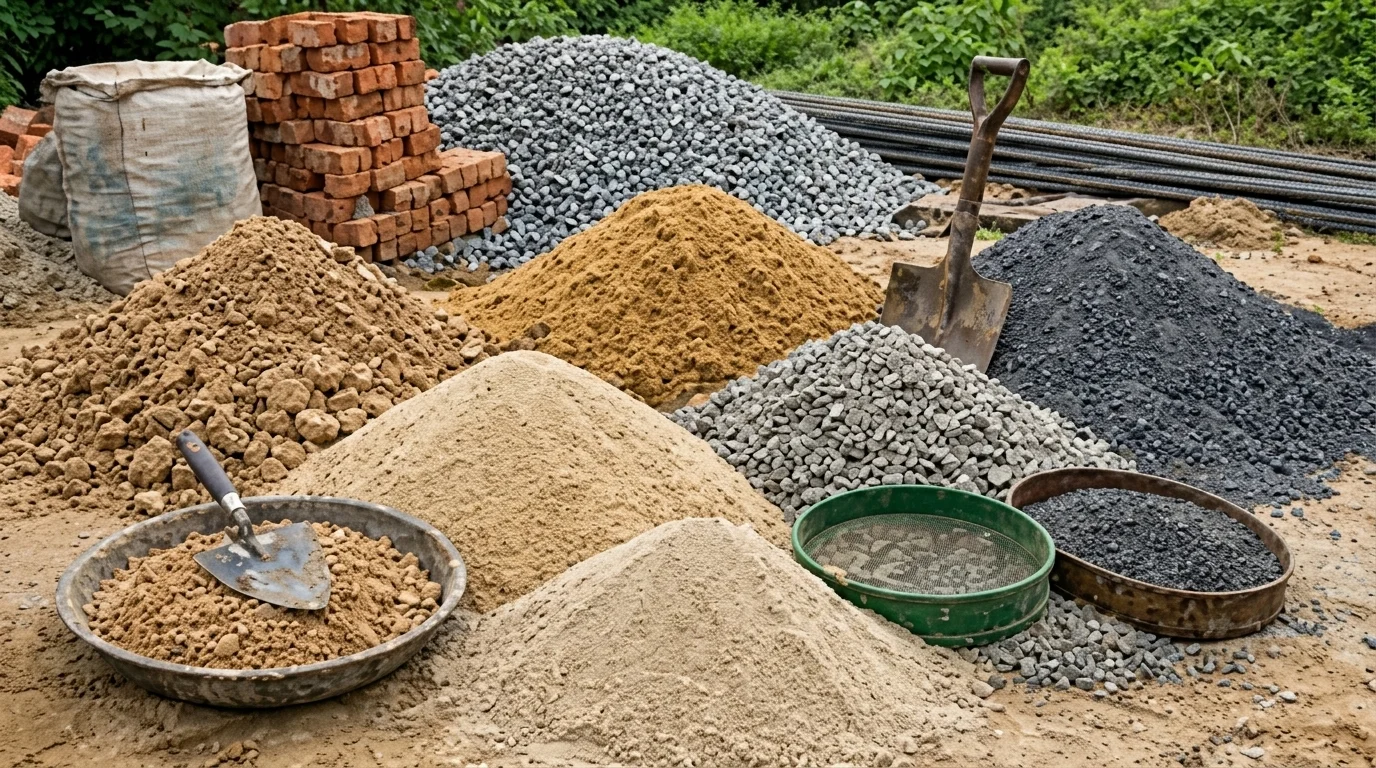
Three percent. That is how much very fine dust one of the most widely used concrete sand standards allows in sand for concrete that faces wear and tear. ASTM C33 caps material finer than 75 micrometers at 3.0 percent by mass for concrete subject to abrasion, and 5.0 percent for all other concrete.
But you cannot see 3 percent. A sand pile can look clean, feel gritty, and still carry far more fine silt than that. And in Punjab, the most common local sands start at a disadvantage. A 2023 study found that Ravi and Chenab river sands are fine and do not meet ASTM grading requirements for fine aggregate on their own.
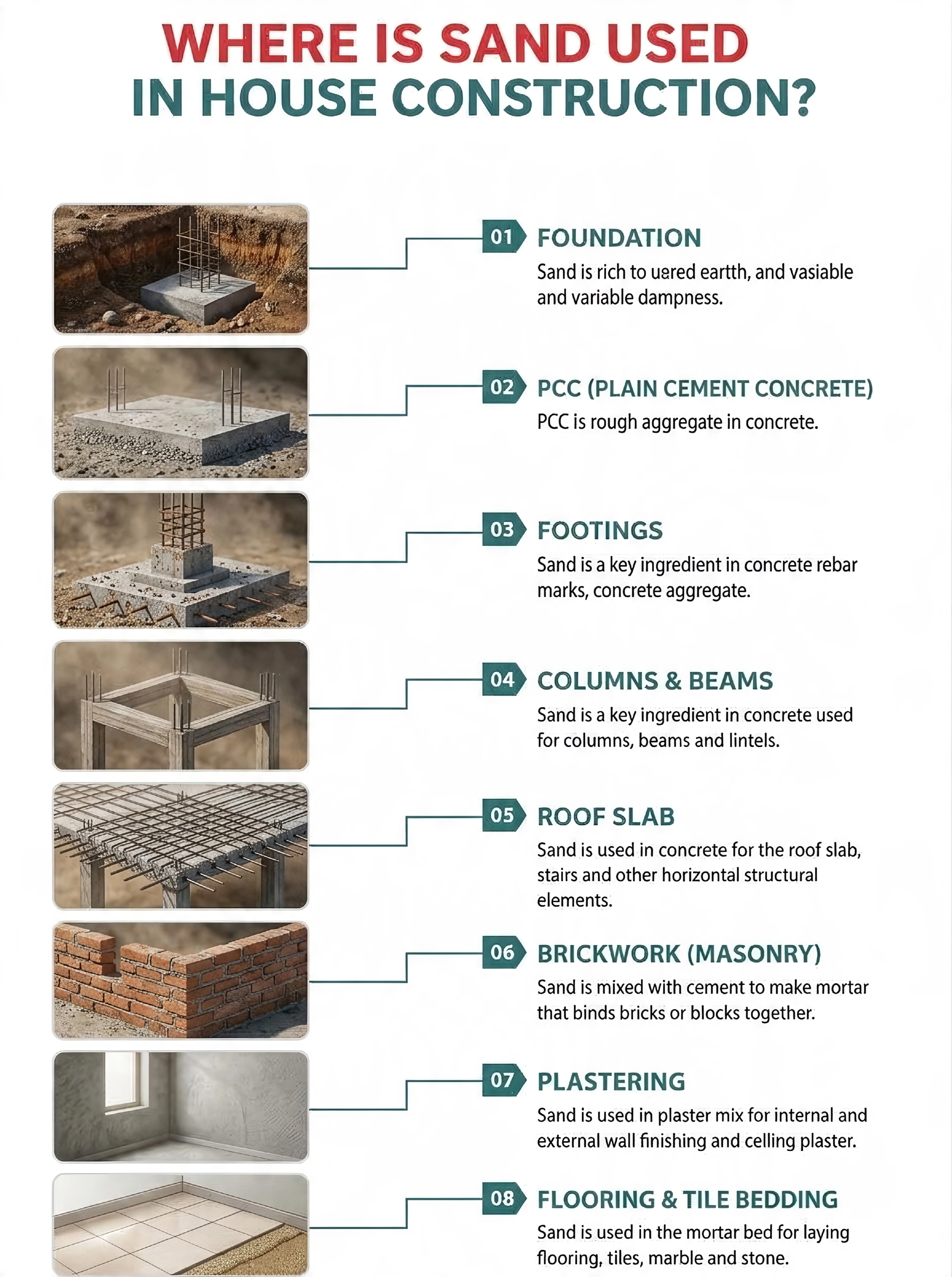
Sand is a big part of almost everything you build. In a common 1:4 cement-sand mortar, sand is 4 of every 5 parts by volume. In a 1:2:4 concrete mix, it is 2 of every 7 parts. So if the sand is poor, a large share of your wall, plaster, or slab is poor too. Good sand is clean, well graded, and free of silt, clay, salts, and organic matter.
Why Sand Quality Decides How Long a House Lasts
Sand is not just filler. In mortar, plaster, and concrete, cement paste has to coat every grain and glue it to the next one. When the grains are dirty, badly sized, or mixed with harmful material, that glue cannot do its job. The weakness stays hidden until cracks, damp patches, or crumbling plaster appear years later.
How Silt and Clay Weaken the Cement Bond
Silt and clay are particles so small they behave like dust. They coat the sand grains, so the cement paste sticks to the dust instead of the sand. Fine particles also have a huge surface area, so they soak up water and cement paste that the mix needs.
That is why standards set tight limits. ASTM C33 allows no more than 3.0 percent clay lumps and friable particles in fine aggregate, and caps very fine material at 3.0 to 5.0 percent depending on the concrete.
Effects of Organic Matter, Salts and Oversized Particles
Silt is not the only problem. Three other contaminants cause trouble in different ways:
Organic matter such as decayed leaves and roots can interfere with how cement sets. ASTM C33 says fine aggregate must be free of injurious amounts of organic impurities.
Salts from marine or contaminated sand can corrode steel reinforcement. GharHub's sand guide warns that untreated sea sand should not be chosen just because it is cheap.
Oversized particles such as pebbles and gravel break the smooth grading the mix needs. ASTM C33 requires 100 percent of fine aggregate to pass a 9.5 mm sieve.
Impact on Plaster Cracking and Masonry Bond
Plaster and mortar are where poor sand shows up first. Silty sand needs more water to become workable. Extra water means more shrinkage as the plaster dries, and shrinkage leads to fine cracks. In brick walls, weak mortar holds the bricks less firmly, so the wall is more likely to crack when it settles or takes a load. GharHub's guide to why brick walls crack covers this in more detail.
Related: https://gharhub.com/brick-wall-cracks-causes-prevention-repairs
Quick On-Site Tests You Can Do Today
You do not need a lab to catch most bad sand. The five checks below use your hands, a clear jar, some salt water, and a bucket. Together they take about two hours, mostly waiting time. They will not replace a lab report, but they will stop you from accepting a clearly bad load.
Visual and Hand Feel Test
Start with your eyes and hands. Good construction sand looks even in colour and has sharp, gritty grains you can feel between your fingers. Here is what to check:
Look for leaves, roots, plastic, shells, or lumps of clay in the pile.
Rub a pinch of dry sand between your palms. Clean sand falls away and leaves your hands almost clean.
If your palms stay coated with fine brown or grey dust, the sand likely carries silt or clay.
Squeeze a fistful of damp sand. If it holds a sticky ball like dough, suspect clay.
This test is fast but rough. Use it to decide whether a load deserves a closer look, not to approve it.
Jar (Silt) Test: Step by Step
The jar test, also called the silt test, shows how much fine silt is mixed into your sand. Silt is lighter than sand, so when you shake the two in water, the sand sinks first, and the silt settles on top as a separate layer.
This method follows the field procedure of using a 250 mL clear jar and a 1 percent salt-water solution. The salt helps the fine particles settle faster.
Results:
under 5% = good
5 to 8% = borderline and should be washed if possible
above 8% = avoid or wash.
Bulking Test and Why Volume Measurements Mislead
Bulking means damp sand takes up more space than the same sand when dry. A thin film of water pushes the grains apart. Sand bulks the most at about 4 to 6 percent moisture, when it can occupy roughly 20 to 40 percent more volume than dry sand.
This matters because most sites in Pakistan measure sand by volume, using a trolley or a cubic foot box. If your sand is bulked, every "cubic foot" holds less real sand than you think, and your mix ends up short on sand.
To check bulking on site:
Fill a container about two-thirds full with damp sand and level it. Measure the height (h1).
Empty it, then fill it with water and pour the same sand back in slowly.
Stir to remove air. Once the sand settles, measure its new height (h2).
Bulking percent = (h1 minus h2) ÷ h2 × 100.
Moisture Check Before Mixing
Wet sand adds water to your mix that you did not plan for. That extra water weakens mortar and concrete. Before mixing, squeeze a handful of sand:
If it runs through your fingers, it is fairly dry.
If it holds its shape but leaves your hand only slightly damp, it is moist.
If water drips out, it is saturated. Reduce the water you add, or let the sand drain first.
Organic Impurity Smell and Colour Check
Organic matter often gives itself away. Smell a fresh handful of damp sand. An earthy, rotting, or swampy smell suggests decayed plant material. Very dark brown or black patches are another warning sign.
For a firmer answer, labs use the ASTM C40 test. A 400 g sample is shaken with a 3 percent sodium hydroxide solution and left for 24 hours. If the liquid above the sand turns darker than the standard Organic Plate No. 3, the sand may contain harmful organic impurities.
How to Read Your Results (Limits Table)
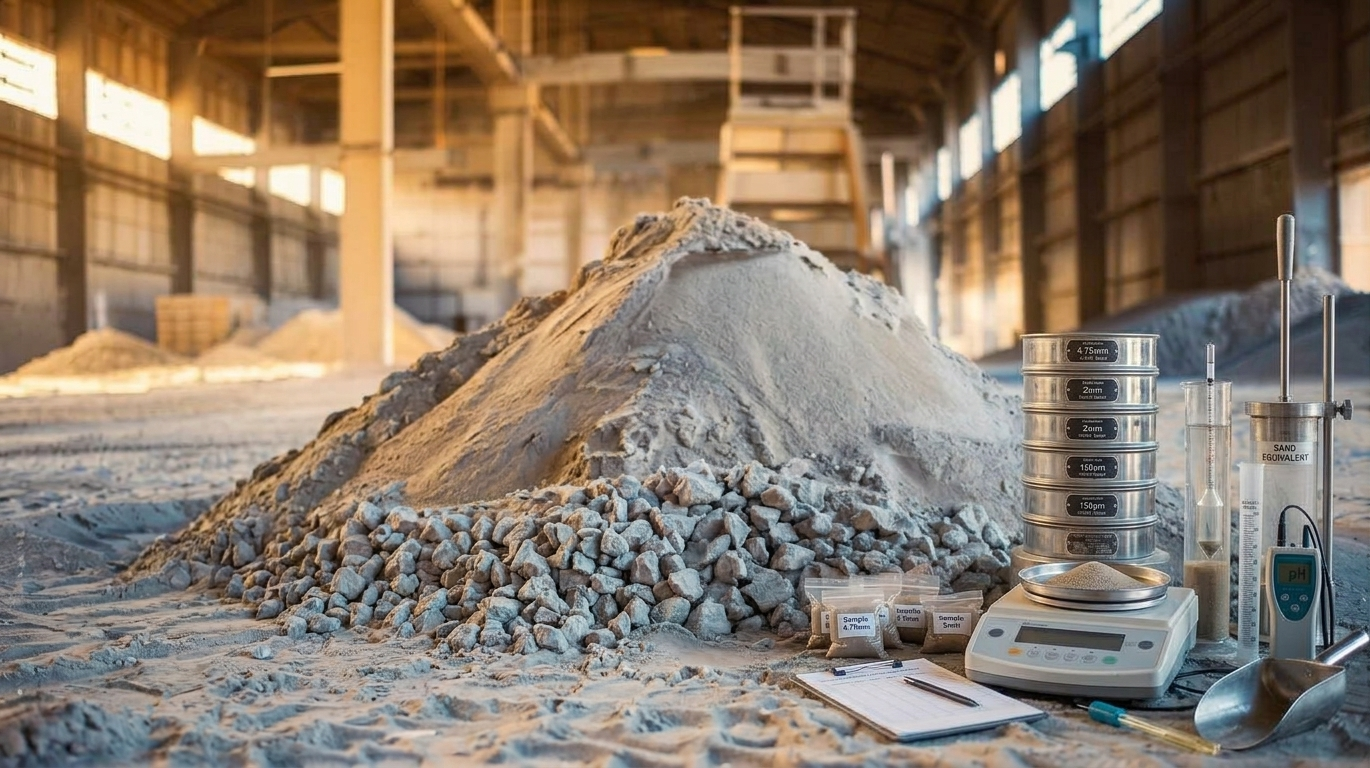
Fineness modulus explained. Fineness modulus (FM) is one number that describes how coarse or fine a sand is. A lab passes the sand through a stack of sieves and adds up the share retained. A higher FM means coarser sand.
A test result means little until you compare it with a limit. The table below gathers the main limits so you can see at a glance whether your sand passes.
Test | Limit |
Material finer than 75 µm (concrete subject to abrasion) | 3.0% max by mass |
Material finer than 75 µm (all other concrete) | 5.0% max by mass |
Same limits for manufactured sand free of clay or shale | Raised to 5% and 7% |
Clay lumps and friable particles | 3.0% max |
Fineness modulus | 2.3 to 3.1 |
Organic impurities (C40 colour test) | Not darker than the standard colour |
Material finer than 75 µm, natural sand | 3% max |
Material finer than 75 µm, manufactured sand | 15% max |
Field jar silt test | 8% max |
Pakistan-Specific Sand Risks
Most sand guides online are written for other countries. Sand in Pakistan, especially in Punjab, has its own patterns. The common names you hear on site, Ravi, Chenab, and Lawrencepur, describe very different materials. Knowing how each behaves helps you choose the right sand and the right test.
River, Pit and Crushed Sand: How Their Profiles Differ
Ravi, Chenab, and Lawrencepur sands are the most common fine aggregates used in civil engineering projects in Pakistan. Research shows how different they are:
Sand | Median grain size (D50) | Fineness modulus |
0.87 mm | 2.4 | |
0.25 mm | - | |
0.22 mm | 1.21 |
Ravi and Chenab sands are fine and do not meet ASTM grading on their own. They are widely used for plaster and filling, but need care in structural concrete. Lawrencepur sand is coarser and closer to concrete sand grading. It also costs more. Crushed sand or quarry dust can fix fine river sand.
Monsoon and Rain: Why Stockpiles Change After a Storm
Punjab's river sand is renewed by floods. A Punjab Mines and Minerals Department profile of the Saggian sand block on the River Ravi says the deposits are replenished every year during the flood season (Punjab Mines and Minerals). That means the sand from one source can change from season to season, so a test done last year does not prove this year's sand.
Rain also changes sand already on your site:
Water washes fine particles down through a pile, so the bottom can end up siltier than the top.
Wet sand bulks, so volume measurements become unreliable.
Runoff from nearby soil can carry mud into an uncovered pile.
Dust and Contamination on Busy Sites
A clean load can become dirty after it arrives. Sand dumped straight onto soil picks up clay from below. Busy sites add cement spills, brick dust, plastic, and food waste. Piles next to roads collect dust from passing traffic. The simple fix is to store sand on a hard, clean base and cover it.
When to Wash Sand and When to Reject the Source
Washing works when the problem is loose silt or dust. It does not fix sand that is too fine overall, full of clay lumps, or contaminated with salt. Use these rules of thumb:
Jar test under 5 percent: use as is.
Jar test 5 to 8 percent: wash before use in plaster, mortar, or concrete.
Jar test above 8 percent, or sticky clay lumps: reject the load and ask for a different source.
Fineness modulus far below 2.3: do not rely on washing. Blend with coarser sand or crushed sand, or choose a different source for structural work.
Suspected salt or sea sand: reject unless a lab report shows it is safe.
Build a Testing Schedule for Your House
One test at the start is not enough. Sand changes from source to source, load to load, and even day to day on site. A simple schedule tells you when to test, so you catch problems before the sand goes into your walls.
Test Before Purchase (Sample From the Source): Before you place a large order, ask the supplier for a sample from the actual pile or source.
Test Each New Delivery: Every truck or dumper can come from a different part of the riverbed or quarry.
Re-test After Rain or a Change in Supplier: Re-test whenever conditions change. Rain can wash silt through a pile and add mud from the ground. A new supplier means a new source.
Cost of Testing vs Cost of Failure
Many people skip sand tests to save money. But lab tests in Lahore cost far less than a single load of sand. Here are real published rates, so you can compare for yourself.
What Sand Tests Cost in Lahore:
Lab test | Rate | Lab |
Sieve analysis of fine aggregate, including fineness modulus | Rs 1,276 (incl. PST) | DHA Lahore Material Testing Lab, 2023 rates |
Specific gravity and absorption | Rs 1,624 (incl. PST) | DHA Lahore Material Testing Lab |
Sieve analysis of sand | Rs 1,500 | UMT Construction Materials Lab |
Fineness modulus of sand (gradation zone) | Rs 2,000 | UMT Construction Materials Lab |
Water absorption of sand | Rs 2,000 | UMT Construction Materials Lab |
What Sand Costs
Sand | Price on GharHub |
Ravi sand | Rs 30,000 to 45,000 per dumper |
Chenab regular sand | Rs 85 to 95 per cubic foot |
Premium Chenab sand | Rs 95 to 105 per cubic foot |
Lawrencepur sand | Rs 250 to 260 per cubic foot |
Source: Gharhub sand prices. Dumper prices depend on load size and delivery distance.
The cost of failure is harder to put a number on, because it depends on your house. But it usually means one or more of these:
Plaster that cracks or hollows and must be chipped off and redone.
Extra cement added to make up for weak sand.
Damp and salt patches that return after every repaint
Weaker concrete in slabs, beams and columns, which is the hardest to fix
Supplier Checklist and Purchase Protocol
Testing catches bad sand. A good buying routine stops it from reaching your site in the first place. Use the steps below every time you order, from the first phone call to storing the sand on site.
Ask Questions Before Ordering: A reliable supplier will answer queries without hesitation.
Request a Supplier Test Report: A useful lab report should show lab name, date, and sample source, sieve analysis results, fineness modulus, and organic impurity results, if the sand is for concrete.
Inspecting the Truck and Sample on Delivery: Check every load before it is tipped onto your site. Turning a truck away is easy. Removing a tipped load is not.
Storage and Protection on Site: Good sand can still be ruined by poor storage. Keep each pile on a clean, hard surface such as a brick floor or plastic sheet, not bare soil, and Separate from other sand types.
Common Mistakes That Lead to Poor Sand
Even careful builders fall into a few traps. These mistakes are common because each one feels like common sense at the time.
Judging sand by colour alone. Colour depends on the source rock, not just cleanliness. A golden sand can be full of silt, and a grey sand can be clean. GharHub's own sand guide warns against relying on appearance alone for structural concrete. Always back up your eyes with a jar test.
Measuring by volume with damp sand. Damp sand can take up 20 to 40 percent more space than dry sand. If you measure it by the trolley or cubic foot box, your mix gets less sand than planned. Check bulking, or measure sand by weight where you can.
Test once and assume the rest matches. The first delivery may be good while the fifth is not. Sources change, piles get rained on, and suppliers switch trucks. Test every new delivery, and log the results so you can spot a change.
People Also Search For: https://gharhub.com/today-sand-price-in-pakistan.
Conclusion
Testing sand quality comes down to three stages. First, run quick field checks on site: the hand feel test, the jar silt test, the bulking test, and a moisture check. Second, confirm with a lab sieve analysis and fineness modulus test. Third, follow a supplier protocol that covers sampling, delivery checks, and proper storage.
In Pakistan, this matters even more, because the most common river sands, Ravi and Chenab, are fine and often fall short of ASTM grading on their own. A few minutes and a few hundred rupees of testing can protect plaster, mortar, and concrete that you expect to last for decades. Test before you buy, test every delivery, and test again whenever the weather or the supplier changes.
Frequently Asked Questions
How do I test sand quality at home?
You can test sand quality at home with three simple checks. Rub dry sand between your palms to feel for dust and clay. Run a jar test with salt water to measure silt. Squeeze a handful of damp sand to judge moisture and stickiness.
What does the silt jar test show?
The jar test shows how much silt is mixed into your sand. After shaking sand in salt water and waiting two hours, silt settles as a layer on top of the sand. Silt percent equals the silt layer height divided by the sand layer height, times 100.
What is fineness modulus, and what range is good?
Fineness modulus is a single number that shows how coarse or fine a sand is. ASTM C33 requires 2.3 to 3.1 for concrete sand.
Which test should I use for which problem?
Problem you suspect | Best test |
Too much silt or dust | Jar test, then lab wash test |
Clay | Hand squeeze test, then lab clay lumps test |
Sand too fine or too coarse | Lab sieve analysis and fineness modulus |
Wrong quantity when measured by volume | Bulking test |
Wet sand | Moisture squeeze check |
Organic matter | Smell and color check, then ASTM C40 lab test |
How often should I test sand?
Test sand at three points: once before you buy, on every new delivery, and again after rain or a change of supplier. Lab tests are most useful at the start and whenever the source changes.
Can wet sand be used directly?
Yes, but only if you adjust the mix. Wet sand carries its own water, so reduce the water you add. Damp sand also bulks by roughly 20 to 40 percent, so measuring it by volume gives you less sand than you think.
Does the sand need washing?
Sand needs washing when the jar test shows about 5 to 8 percent silt, or when you can see dust and fine mud. Washing removes loose silt. It cannot fix sand that is too fine overall, full of clay lumps, or contaminated with salt, so reject those loads instead.