 Contact Us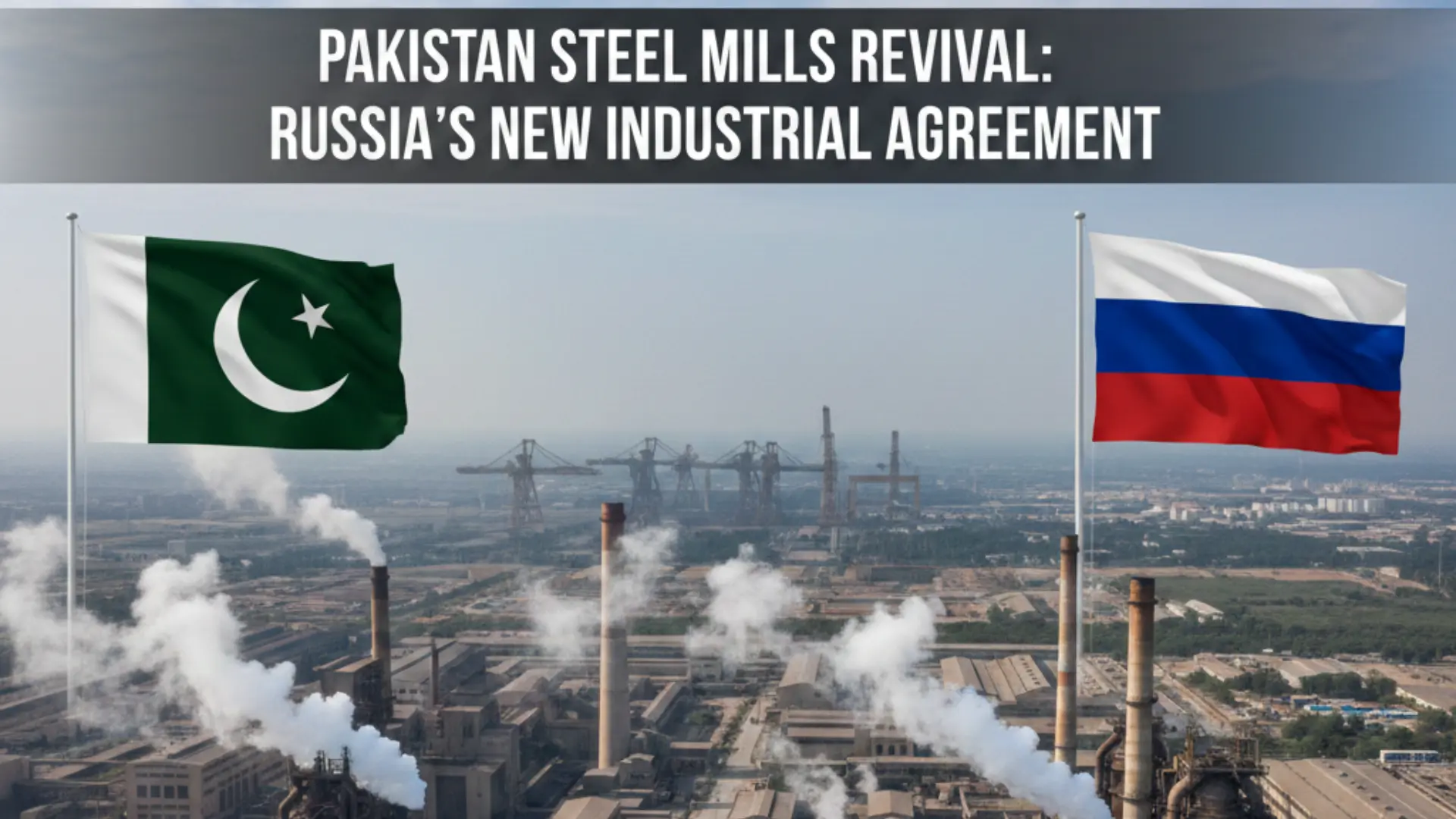
Pakistan has possibly been wondering why its steel industry, once a source of industrial pride, has been a struggle for decades. The biggest steel mill in the country, Pakistan Steel Mills (PSM), has been shut down 2 times, incurred losses, and has been able to revive itself through years of unsuccessful revival efforts. But now, a new industrial agreement with Russia promises to change the landscape of steel production in Pakistan.
In this article, we’ll give you a complete breakdown of the agreement, explain the timeline, projected production, and how this could impact the construction industry and steel availability in Pakistan.
What Was Signed Between Pakistan and Russia? Key details of the agreement
The latest agreement between Pakistan and Russia is designed to revive Pakistan Steel Mills and modernize its facilities.
Here’s a simple breakdown:
1. Protocol Signing
There have been two protocols: the first protocol and a second one in November 2025, with an outlook for a bankable EPC (Engineering, Procurement, Construction) framework.
Such protocols specify obligations, monetary inputs, and technical collaboration.
2. EPC Contract
EPC is a standard in international industrial projects. Russia will provide expertise, machinery, and supervision for modernization or reconstruction.
This ensures that PSM will meet global steel production standards.
3. Technical Audit
Experts will measure the current infrastructure, machinery, and safety compliance.
This assists in determining the cost of rehabilitating the aged units or constructing new assets.
4. Projected Capacity
Parameter | Current Capacity | Projected Capacity After Revival |
Crude Steel Production | 0.1 million tons | 1.2 million tons/year |
Finished Steel Products | 0.05 million tons | 1.0 million tons/year |
Employment Impact | 2000 active | 10,000+ direct jobs |
Rehabilitation vs New Build: What Russia Proposes
The greatest inquiry is whether PSM will be fully refurbished or partially modernized.
Rehabilitation:
Modifying the current machinery, repairing damaged machines, and improving productivity.
Pros: Faster completion, lower cost
Cons: Limited capacity increase
New Build:
Constructing modern steel production units from scratch.
Pros: Full utilization, sustained growth in production.
Cons: More expensive, more time-consuming.
The average life of modern steel plants all over the world is 30-40 years. New build guarantees long-term stability in the industry, whereas rehabilitation can be used in the short run.
Timeline and Next Steps (2025-2027)
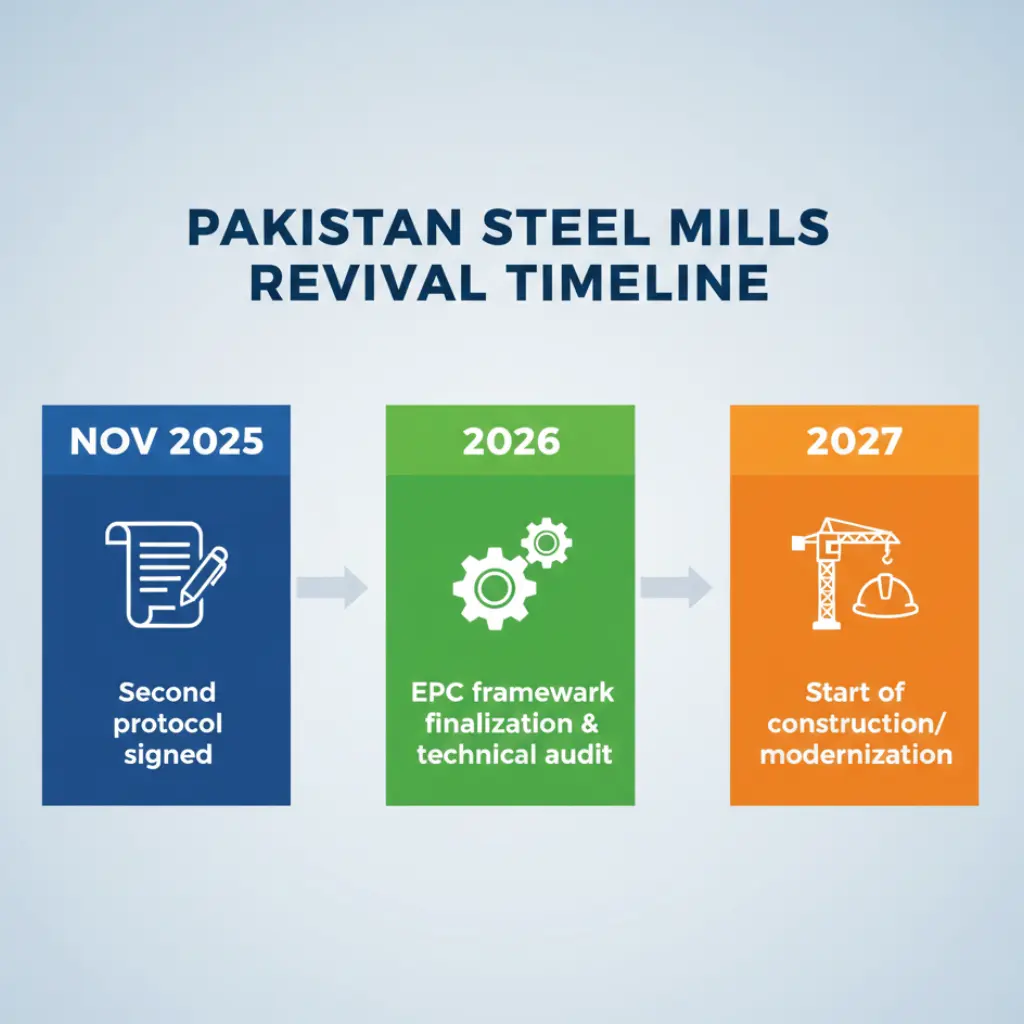
Here’s a clear timeline of the revival plan:
Nov 2025 – Second protocol signed to move towards a bankable EPC agreement
2026 – Finalization of EPC framework and technical assessments
2027 – Start of physical construction/modernization
Each step will include machinery import, civil work, and recruitment of technical staff.
Strategic Context and Challenges
1. Geopolitical Significance
Russia’s involvement strengthens bilateral industrial cooperation.
Enhances Pakistan’s self-reliance in steel production, reducing import dependency.
2. Privatization Aspect
PSM was partially privatized in past discussions; Russia’s agreement may influence the ownership structure.
Private sector partnership ensures efficiency and long-term sustainability.
3. Liability and Financial Risks
Technical audits will identify liabilities, including debts and environmental compliance issues.
EPC contracts minimize risk by transferring responsibilities to the contractor.
How Much Steel Will Pakistan Produce After Revival?
Projected Annual Capacity Post-Rehabilitation/Build:
Product type | Annual production | Notes |
Crude Steel | 1.2 million tons | Covers domestic demand partially |
Finished Steel products | 1.0 million tons | Reduces import dependency by approximately 40 % |
Billets and Rods | 0.8 million tons | Supports construction and manufacturing |
Impact on Construction Prices
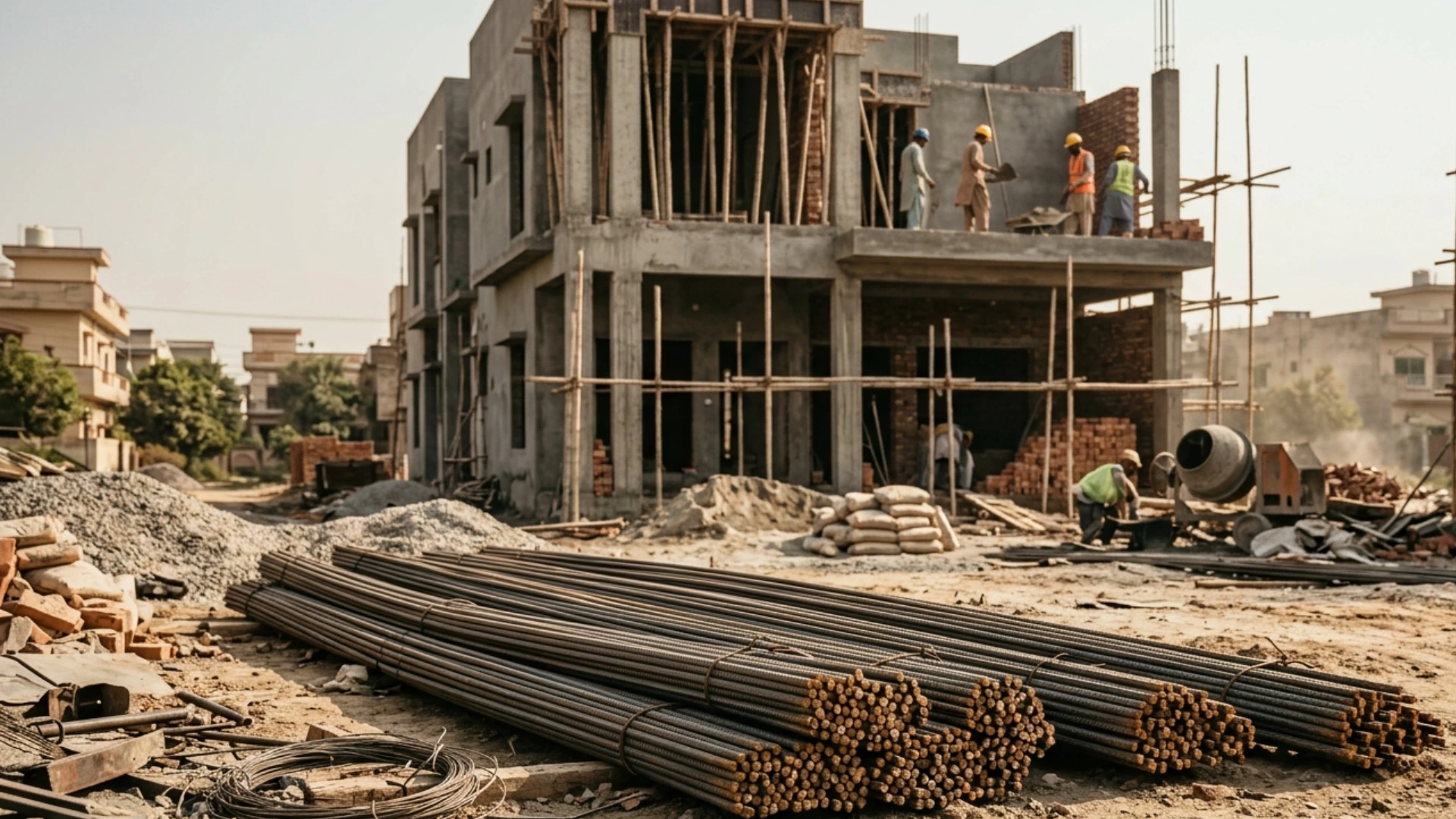
With local steel production, grey structure costs may stabilize, helping builders and homeowners.
Reduced imports mean less exposure to global price fluctuations.
Impact on Construction Industry & Builders
For builders, contractors, and developers, the PSM revival is critical:
Steel Availability: Consistent supply will prevent project delays
Price Stabilization: Less reliance on imports reduces costs
Verified Suppliers: Platforms like GharHub connect developers with trusted steel suppliers and construction experts
Why This Agreement Matters to Pakistan
Economic Benefits: Reduced import bill, job creation, industrial growth
Long-term Sustainability: Modern facilities mean PSM can operate efficiently for decades
Urban Development Impact: Increased steel availability supports housing and infrastructure projects
Conclusion
The rebuild of Pakistan Steel Mills through collaboration with Russia is an eye-opener to the industrial sector in Pakistan. This agreement is going to transform the construction and industrial sector since it will help in improving the manufacturing capacity of steel and also in stabilizing the prices of the products for builders and homeowners.
With the EPC framework fully implemented, by the year 2027, Pakistan can be fully self-reliant in the production of its steel, thousands of new employment opportunities will be created, and the economy of the country will be more robust.
FAQ
Q1. What is Pakistan Steel Mills' revival plan with Russia?
It involves a mix of modernization and possible new construction, managed via an EPC agreement, to restore full steel production.
Q2. When will physical construction start?
The construction/modernization activities should begin in 2027, provided the technical audits and the EPC completion are finished.
Q3. How will this affect steel prices in Pakistan?
The local production will stabilize the prices of steel and lower its dependence on imports.
Q4. Is privatization still a possibility?
Partial privatization remains a factor, depending on final agreements between Pakistan and Russia.