 Contact Us
Bulk purchasing of crush appears easy. You arrange for a truck, inquire about the bajri price, and get the materials delivered to your construction site. However, you need to ask one vital question first.
Is the crush suitable for your construction purposes?
Low-quality crush may have excessive levels of dust, clay, soft rocks, or foreign materials. It may also vary in size. All of these will have an effect on how well the concrete is mixed and the durability of the structure. Crush is among the most common building materials used in constructing concrete buildings. When building a home, the point to note is that you should not pick crushed stone based on price alone. It is important that you consider its quality before making bulk purchases.
This guide explains what to look for, which simple tests you can do on site, and what questions to ask before accepting a bulk delivery.
Why Crush Quality Matters in House Construction
The crushed stones, which are also known as crushed stone aggregates or bajri, are considered a key component of concrete. They are used in various structural members like foundations, columns, beams, and slabs.
The quality of the aggregate can influence the performance of concrete. There are some physical characteristics of the aggregate, such as grading, particle size, shape, and texture, that can affect both fresh and hardened concrete.
People also searched for: https://gharhub.com/updated-construction-materials-pricelist
What Is Good-Quality Crush?
Good-quality crush is generally clean, hard, properly graded, and free from excessive dust, clay, organic matter, and other harmful impurities. The correct size also depends on how the aggregate will be used.
Do not judge quality from color alone. A professional assessment should consider the source, grading, cleanliness, strength, and intended use.
ASTM C33/C33M specifies requirements for the grading and quality of aggregates used in concrete. ASTM's concrete aggregate specification also highlights grading, organic impurities, clay lumps, friable particles, soundness, abrasion, and potentially reactive aggregates as important quality considerations.
Here is a simple checklist:
Quality factor | What to look for |
Cleanliness | Little visible dust, clay, or dirt |
Hardness | Stones should not easily break by hand |
Size | Consistent with the required specification |
Grading | A suitable mix of particle sizes |
Shape | Strong, angular particles are generally useful for concrete |
Impurities | No visible organic matter or unwanted material |
Consistency | Similar quality throughout the load |
Different Types of Crushes
The selection of crush is dependent upon the nature of the project, size needed, site conditions, and the requirements specified by your contractor or engineer.
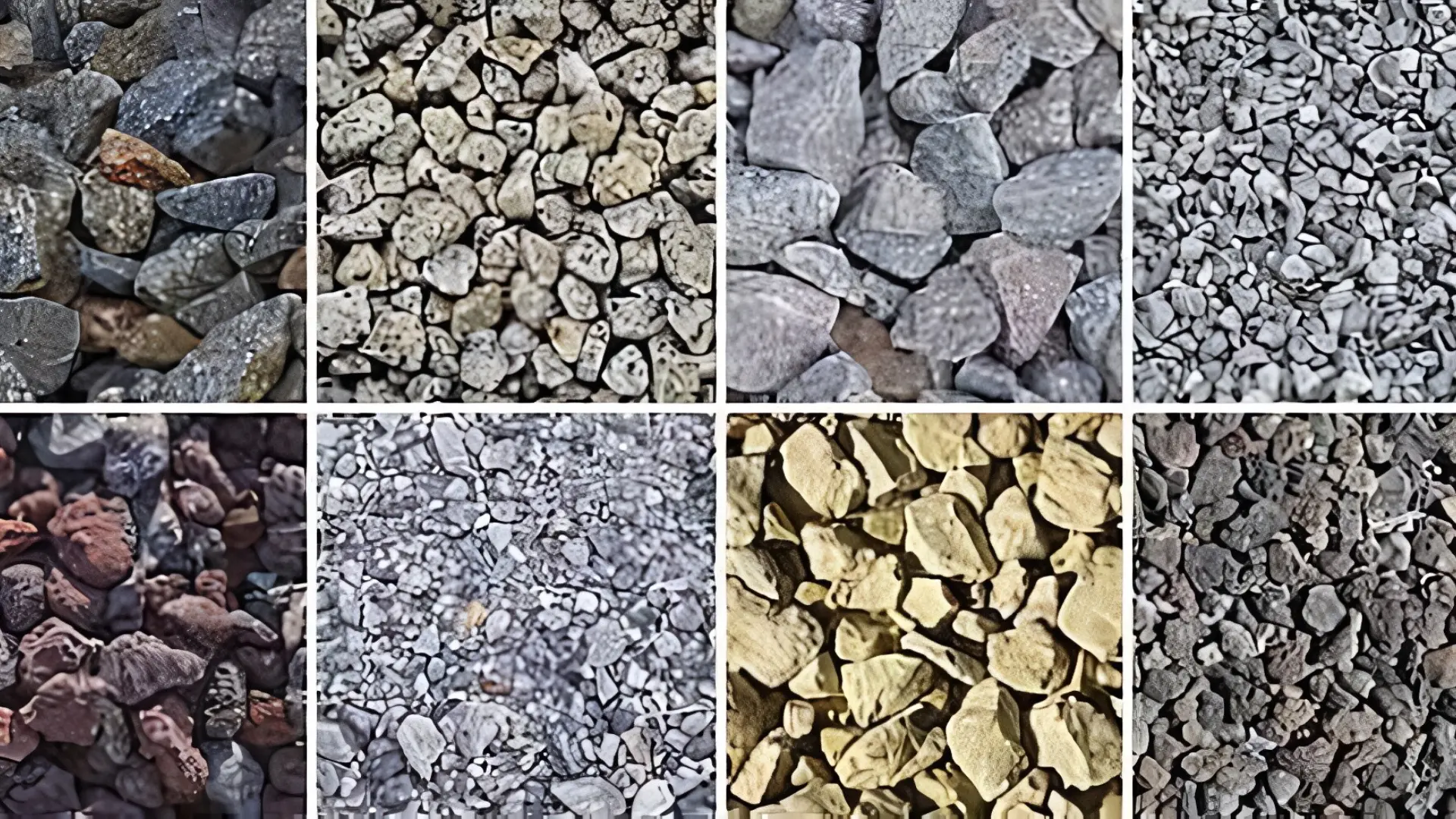
There are several types of crushes available in Gharhub, and these include Sargodha 3-Sooter 1/2 Down A-Grade, Sargodha 3-Sooter 1/2 Down B-Grade, Margalla 3-Sooter 1/2 Down A-Grade, Sargodha 1/2 Full A-Grade, Sargodha 1/2 Full B-Grade, and Dina Bajjar Crush.
Crush type | Grade Listing | General consideration |
A-Grade | Common construction aggregate option | |
B-Grade | More budget-focused option | |
A-Grade | Premium aggregate option | |
A-Grade | Used where larger aggregate is required | |
B-Grade | Budget-oriented alternative | |
20 to 30 mm listed | Larger crushed stone option |
The important point is this: the best crush is not simply the most expensive crush. It is the material that matches your project's technical requirements and quality needs.
,
Ways to Check Crush Quality Before Buying
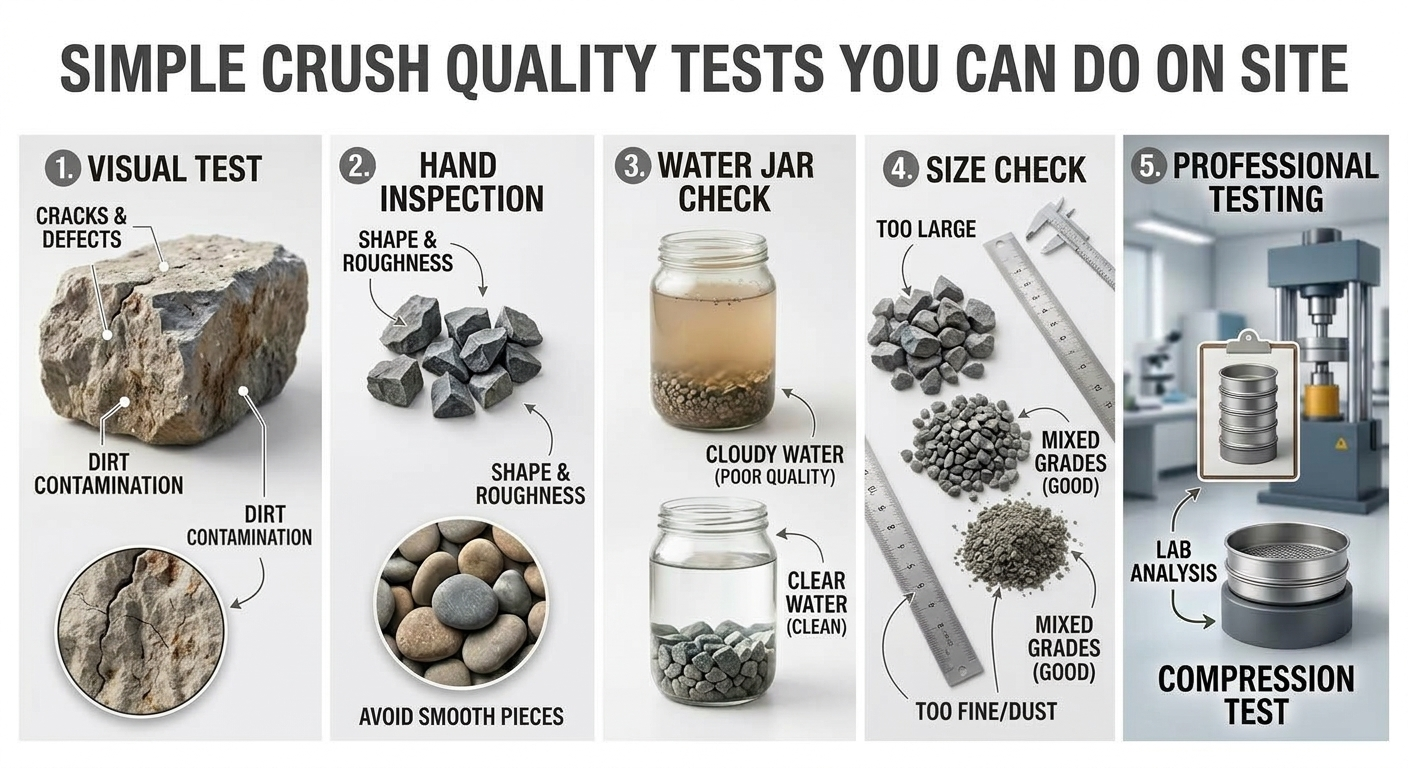
Before ordering a full truckload, inspect a sample. If possible, check material from different parts of the load instead of judging only the top layer.
Here are seven practical checks.
1. Check Crush Size and Grading
Crush should match the size specified for your construction work. Do not assume that bigger stones are always stronger or better. Look at the sample and check whether the particles are reasonably consistent with the agreed specification.
2. Look for Excess Dust and Clay
Excessive amounts of clay or dust may be a problem. Pick up some crushed aggregate and look at your hands. If they are covered in an excessive amount of fine powder or clay, then you have found a problem.
These types of materials may hinder the aggregate from functioning properly. According to the ASTM, clay and other such materials may have to be tested in concrete aggregates.
3. Check Stone Hardness
The right aggregate is supposed to have strong and hard particles that are ideal for the desired purpose. Take some representative stones from your samples and examine whether the particles are cracked, too soft, flaky, or fragile.
If you are using large quantities of aggregate for structural purposes, make sure to request test reports from the supplier or test them yourself.
4. Check the Shape of the Stones
Crushed aggregates have generally angular and irregular surfaces. Such surfaces have the potential to offer useful mechanical interaction in concrete. But shape must not be considered in isolation. Flaky and porous shapes may behave in a different manner than compact shapes.
5. Look for Organic Matter and Impurities
Organic impurities and other harmful substances are recognized quality concerns in aggregate specifications. Your crush should not contain obvious unwanted materials.
Look for:
Leaves
Wood pieces
Soil
Plastic
Coal-like particles
Clay lumps
Other foreign material
6. Check Color and Texture
Color will provide a quick visual cue, but it must never be used as the only quality check. The material should look clean and uniform. A high degree of color and/or texture variability within the same load suggests that multiple materials have been blended.
Natural stone comes in various colors, depending on the geological origin. This means that color does not necessarily reflect the quality of crush.
7. Inspect the Overall Consistency
Taking a sample from the top of the truck will not provide all of the answers. If possible, make sure that you get the material inspected while it is being loaded or unloaded. Compare samples from different sections of the cargo. The quality should be fairly consistent with your order.
For bulk purchases, confirm:
Source of the crush
Required size
Grade
Approximate quantity
Delivery terms
Intended application
Any available quality or test documentation
Consistency is especially important when you are ordering several truckloads for the same project.
Common Signs of Poor-Quality Crush
A warning sign does not automatically make the entire batch unsuitable for use. This will depend on the material in question, its intended application, and other factors.
In case of any doubts concerning the use of material in critical construction applications, you need to talk to your contractor, engineer, or testing lab prior to its use. Look out for the following warning signs.
Warning sign | Why it matters |
Excessive dust | May indicate too much fine material |
Clay or mud | Can indicate contamination |
Soil mixed with stones | Reduces material cleanliness |
Organic matter | Unwanted material in concrete aggregate |
Many weak or broken pieces | May indicate poor particle quality |
Too many flaky pieces | May affect aggregate performance |
Mixed or inconsistent sizes | May indicate poor grading |
Foreign materials | Can affect concrete quality |
How Poor Crush Affects Concrete Strength
Concrete is not just composed of cement but is a composite of cementing materials, water, fine aggregate, coarse aggregate, and other materials as per requirement.
The aggregate forms a major part of the concrete volume. The properties of both fresh and hardened concrete are affected by the type, size, gradation, shape, and surface texture of the aggregate. But crush quality alone does not determine concrete strength.
Bad quality aggregate makes the mix difficult to handle. For instance, too many fines can alter the water requirement and workability of the concrete mix.
A useful way to think about it is:
Good aggregate + correct mix design + proper placement + proper curing = better chance of achieving the required concrete performance.
Concrete strength also depends on factors such as:
Cement type and quantity
Water-to-cement ratio
Aggregate quality
Aggregate grading
Mix proportions
Mixing
Compaction
Curing
Placement practices
This is why you should not judge a concrete mix only by looking at its crush. ASTM also notes that aggregate quality is evaluated through multiple properties and standardized tests rather than one simple visual characteristic.
Related: https://gharhub.com/importance-of-curing-concrete-in-construction
Crush Quality Checklist Before Buying in Bulk
Before placing a large order, use this quick checklist to ensure that the crush you ordered is of good quality.
Supplier Checklist
Verify the supplier and source.
Get the precise crush type
Confirm the exact size.
Confirm the grade
Inquire about quality documentation
Look at the delivered price, not just the advertised one.
Material Checklist
Inspect a representative sample
Check particle size
Check grading
Look for excessive dust.
Look for clay and soil
Check for organic matter
Look for foreign materials
Inspect particle shape
Check for weak or visibly cracked stones.
Check consistency throughout the load
Delivery Checklist
Verify the carrying capacity of the truck
Verify the quantity to be delivered
Verify the delivery location.
Check the material upon receipt
Maintain records for the order and specification.
Gharhub's current crush listings include different sources, grades, and sizes, so it is useful to compare the exact product specifications rather than comparing prices alone.
Conclusion
It is not just about getting the cheapest option when selecting crush for constructing your house. The material selected must fit the specified dimensions and application. It must be clean, adequately graded, and free from impurities that can harm the structure.
When purchasing large quantities, first examine the samples. Examine the dimensions, dust content, clay, hardness, shape, color, texture, and overall consistency. For use in construction, simple visual examination will do, but when testing is necessary, it cannot substitute for the specifications and tests in the laboratory.
Spending a few minutes examining the material before it is delivered may save you from a huge headache in the future. When constructing a house, commercial building, or any other project, select your aggregate based on quality, suitability, quantity, and availability.
Frequently Asked Questions
How to test the quality of the crush before purchasing?
It is necessary to examine the particle size, grading, purity, hardness, shape, and impurities of the crushed stone. It is necessary to examine a sample before placing an order.
What should be the appearance of good quality crush?
Good quality crush is usually clean, hard, well-graded, without any impurities like clay, soil, organic matter, etc. The size requirements depend upon the construction work to be done.
How do I test dust in crush?
It is necessary to take a small quantity of crush and inspect it manually. Excessive dust or mud coating can be an indication. A water and jar test can also be done for identification of excessive fines.
What crush will be most suitable for constructing a house?
No one crush suits all projects. The type and size of crush needed vary based on the mix of concrete, structure, location, and project specifications. Consult your contractor or structural engineer to check what kind of crush is needed for your project.
Can I use crush along with the dust in concrete?
Fine materials can be present in the crushed rocks in small quantities; however, too much dust, clay, or other detrimental materials can be an issue.
Is it wise to test the crush before purchasing in bulk?
Yes, a representative sample of crush needs to be checked before making a bulk purchase. In case of an important structural project, it may also be necessary to test the crush in a laboratory.
Where can I get crush for house construction?
There are several crush products available on GharHub, including Sargodha crush, Margalla Crush, and Dina crush products in different grades and sizes.