 Contact Us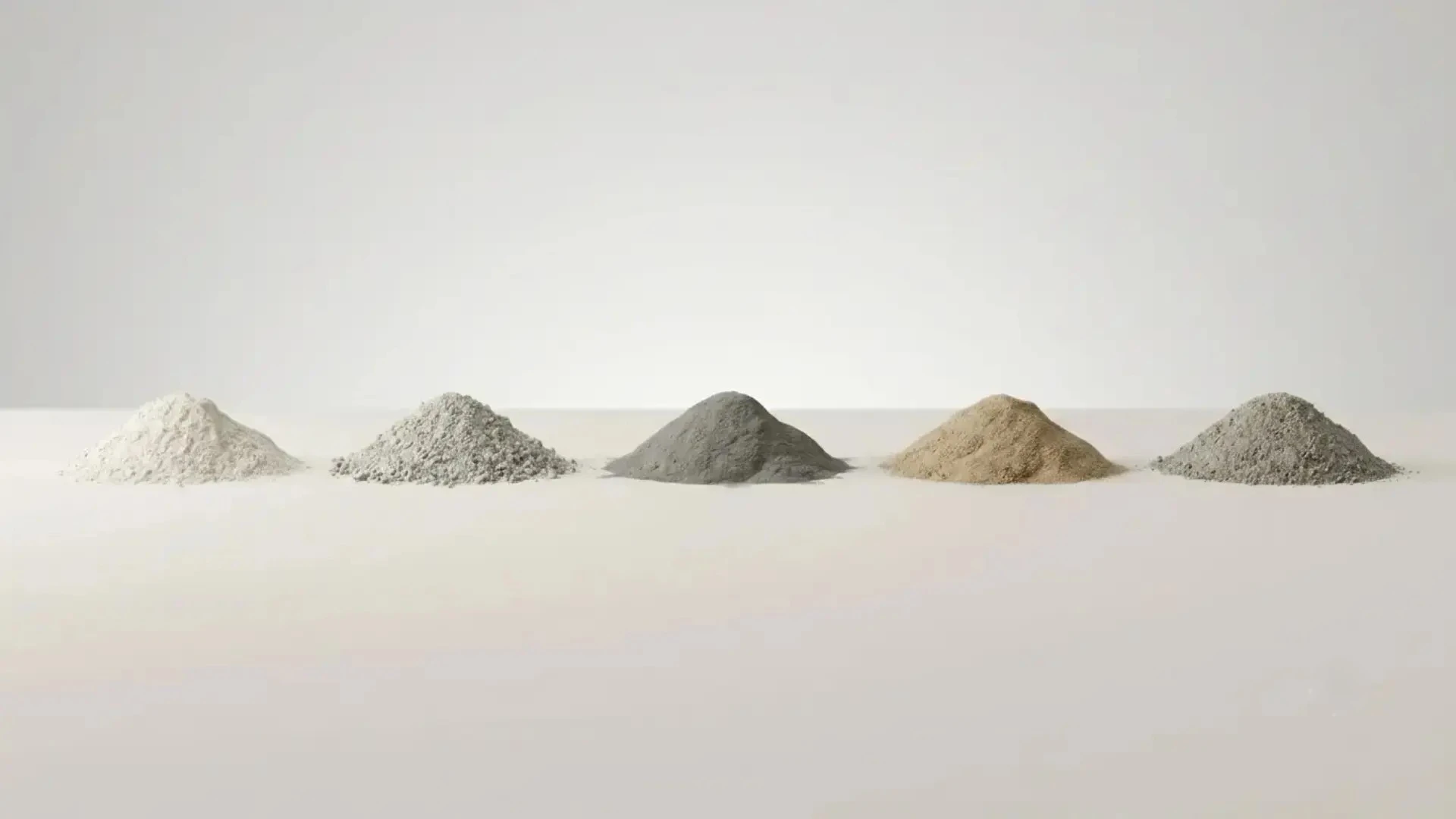
A concrete structure can withstand decades, but the cement selected during its formation will affect how long it lasts. Blended Cement in Pakistan is preferred due to higher durability, sustainability, and value over time despite having no major increase in the cement price. It becomes easier for someone to make an informed decision when they know different blended cements and their prices.
What Is Blended Cement?
Blended cement refers to a type of hydraulic cement where Ordinary Portland Cement clinker is mixed with one or more cementitious materials. These cementitious materials provide better performance than cement and use less clinker during production.
Some cementitious materials include:
Fly ash
Granulated blast furnace slag
Natural pozzolans
Silica fume
Limestone
In Pakistan, today, the use of blended cement is increasing day by day as it is used in housing construction, commercial buildings, bridges, road construction, dams, and industries.
How Blended Cement Is Manufactured
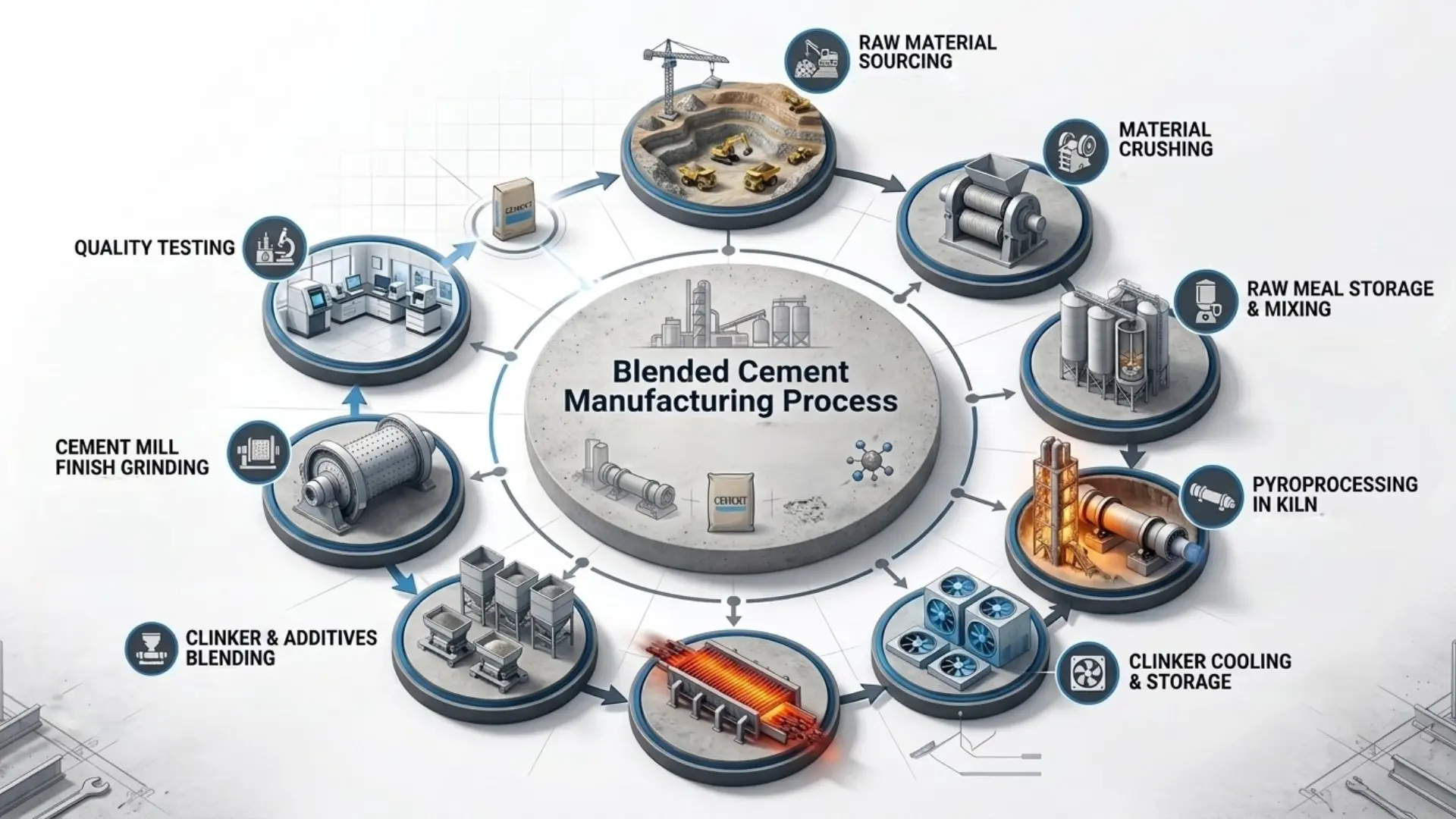
The production process of blended cement is similar to that of Ordinary Portland Cement, but additional mineral materials are mixed into the final product.
Manufacturers collect limestone, clay, and shale and crush them into smaller pieces before blending them in the correct proportions. The prepared mixture enters a rotary kiln where temperatures reach approximately 1,450°C. At this temperature, the raw materials react chemically to form clinker.
Clinker forms the primary binding component of cement. The hot clinker is rapidly cooled to preserve the desired structure. Manufacturers mix it with materials such as fly ash, granulated slag, and limestone.
Gypsum is added, then all materials are finely ground into a fine powder. Before packing, the cement undergoes quality testing, and the cement that passes the quality tests is then packed in 50 kg bags.
Types of Blended Cement in Pakistan
Different projects require different qualities of cement. This is the reason why there are many blended cements available in Pakistan.
Portland Pozzolana Cement (PPC)
Portland Pozzolana Cement is made by adding pozzolanic materials to Portland clinker. This type of cement is commonly used for residential buildings, water tanks, foundations, and marine structures as it provides higher durability and reduces the permeability of concrete.
Portland Fly Ash Cement (PFAC)
Portland Fly Ash Cement is made using Fly ash, which is obtained from thermal power plants. This cement is used in high-rise buildings, bridges, roads, and industrial structures for the purpose of better workability and durability.
Portland Blast Furnace Slag Cement (PSC)
PSC is prepared by adding Portland clinker with Granulated Blast furnace slag obtained from the steel industry. This cement is commonly used in coastal construction, sewage treatment plants, and marine structures for improved performance of concrete, corrosion resistance, and reduced heat of hydration.
Portland Silica Fume Cement
Silica fume is a highly fine material produced as a by-product of the manufacturing process of silicon and ferrosilicon. As the particles of silica fume are finer than cement particles, they can occupy the minute spaces present within the concrete. Silica fume is used in high-strength concrete and industrial floors.
White Blended Cement
The white blended cement is a mixture of white Portland cement and selected minerals without losing its whiteness. This cement is preferred because of its aesthetic appearance.
Related:https://gharhub.com/blogs/prices-of-ordinary-and-sulfate-resistant-cement
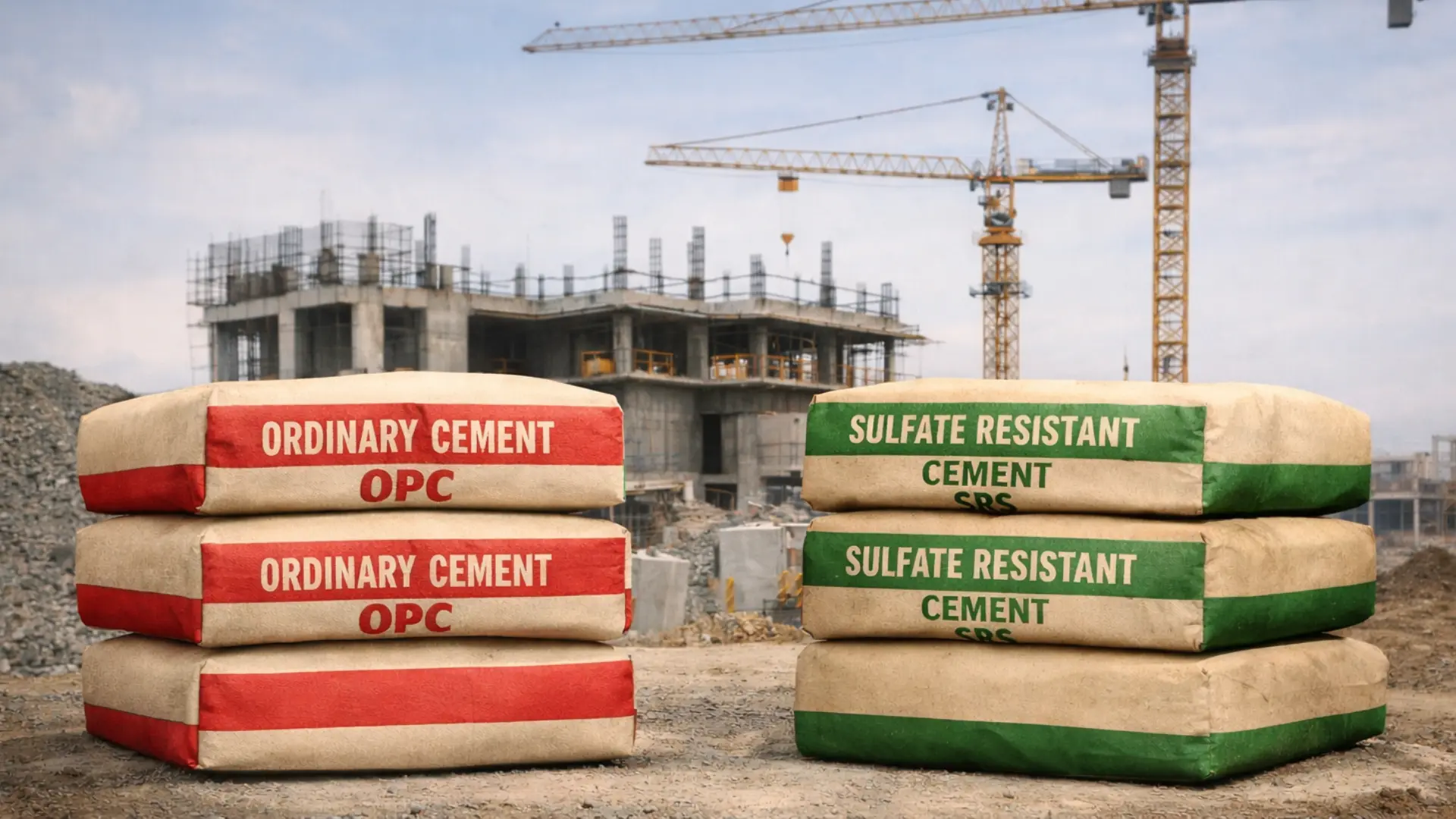
Blended Cement vs Ordinary Portland Cement (OPC)
It all comes down to whether you would prefer blended cement or Ordinary Portland Cement for your work. Both are durable materials used in construction, but they differ in performance.
Feature | Blended Cement | Ordinary Portland Cement (OPC) |
Strength Development | Gains strength gradually with excellent long-term performance | Develops early strength quickly |
Durability | High resistance to moisture, sulfates, and chemicals | Moderate durability in aggressive environments |
Heat of Hydration | Lower heat generation reduces cracking | Higher heat generation |
Workability | Better workability and smoother finishing | Standard workability |
Environmental Impact | Lower carbon footprint due to reduced clinker content | Higher carbon emissions |
Service Life | Longer life in harsh conditions | Suitable for general construction |
Cement Cost | Often offers better long term value despite similar initial cost | Initial price may vary by brand and grade |
Best Applications | Dams, bridges, marine works, foundations, commercial buildings | Residential buildings, precast elements, fast-track construction |
Benefits of Using Blended Cement
The purpose of making blended cement is to enhance the performance of concrete while lowering maintenance costs of a construction project throughout its lifespan. While the cost of cement in Pakistan may not differ much from that of Ordinary Portland Cement (OPC) in terms of price, it can bring higher durability.
Here are the main advantages of blended cement:
High Durability
One of the main benefits of blended cement is higher durability. Higher density of concrete means greater weathering resistance, extended lifespan of the building, and greater stability of the structure.
Increased Resistance to Chemicals and Sulfates
Blended cement decreases water absorption and chemical components. It helps protect reinforcing steel from corrosion and prevents sulfate attack. This type of cement works perfectly well in coastal regions and sewage facilities.
Low Heat of Hydration
Blended cement results in the generation of lower heat levels than Ordinary Portland Cement since some of the clinker is replaced with other material. This characteristic is especially important for Pakistan due to the high heat in summers in that country.
Fewer Cracks
Cracks provide access to water and other detrimental substances, which lead to corrosion of steel reinforcement bars in the structure. Blended cement minimizes cracks by producing lower heat during hydration and shrinking.
Cost Saving
The use of blended cement will be more profitable for customers because of better durability, lower maintenance costs, fewer cracks, and longevity.
Maintenance
The primary objective of construction in modern times is to create buildings that will last for decades without requiring repairs. The use of blended cement will help to provide better protection against moisture, corrosion, or any other chemicals.
Environmental Benefits of Blended Cement
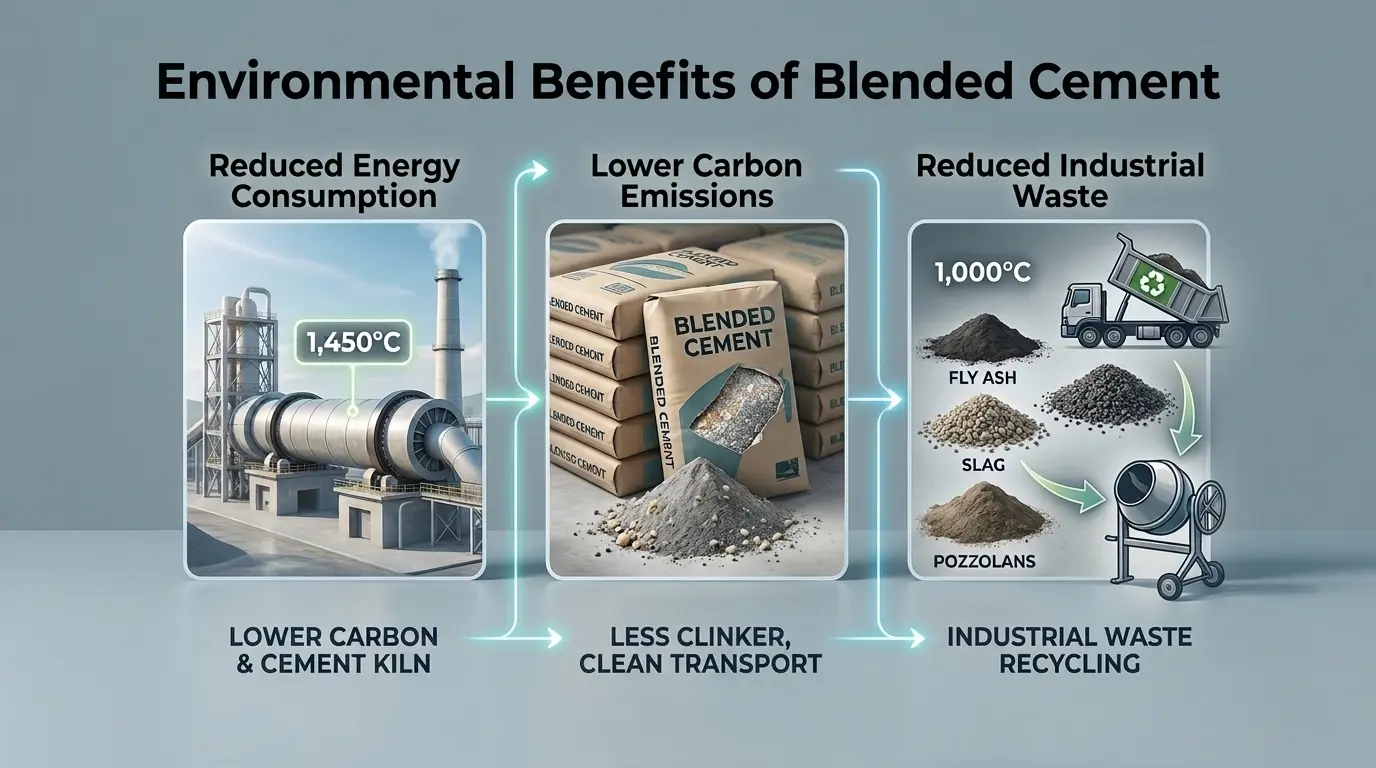
The cement industry is responsible for approximately 7% to 8% of global carbon dioxide (CO₂) emissions, according to the International Energy Agency (IEA) and the Global Cement and Concrete Association (GCCA).
The use of blended cement solves the problem through the partial replacement of clinker with waste products from industries like fly ash and blast furnace slag. Consequently, it enables sustainable construction. Some of the environmental benefits that blended cement offers are:
Lower Carbon Emissions
Reduced Energy Consumption
Reduced Industrial Waste
Blended Cement Price in Pakistan Today
If you are planning a new construction project, one of the first questions is usually, "What is the current cement price in Pakistan?" While prices vary by brand, city, and dealer, blended cement generally falls within the same retail range as high-quality Ordinary Portland Cement (OPC).
As of early August 2026, the average cement price in Pakistan ranges between PKR 1,550 and PKR 1,700 per 50 kg bag. Premium variants such as Sulfate Resistant Cement (SRC) and white blended cement cost more because of their specialized properties.
The retail prices change frequently due to fuel costs, freight charges, seasonal demand, and dealer margins.
Looking for the best value instead of just the lowest cement price? Compare Pakistan's leading cement brands, their strengths, and ideal applications to choose the right cement for your construction project.
Explore our guide: Best Cement Brands in Pakistan (2026)
Blended Cement Price Comparison by Brand in Pakistan
The table below shows the latest approximate retail prices for major cement brands. These figures represent standard 50 kg bags and may vary slightly by city.
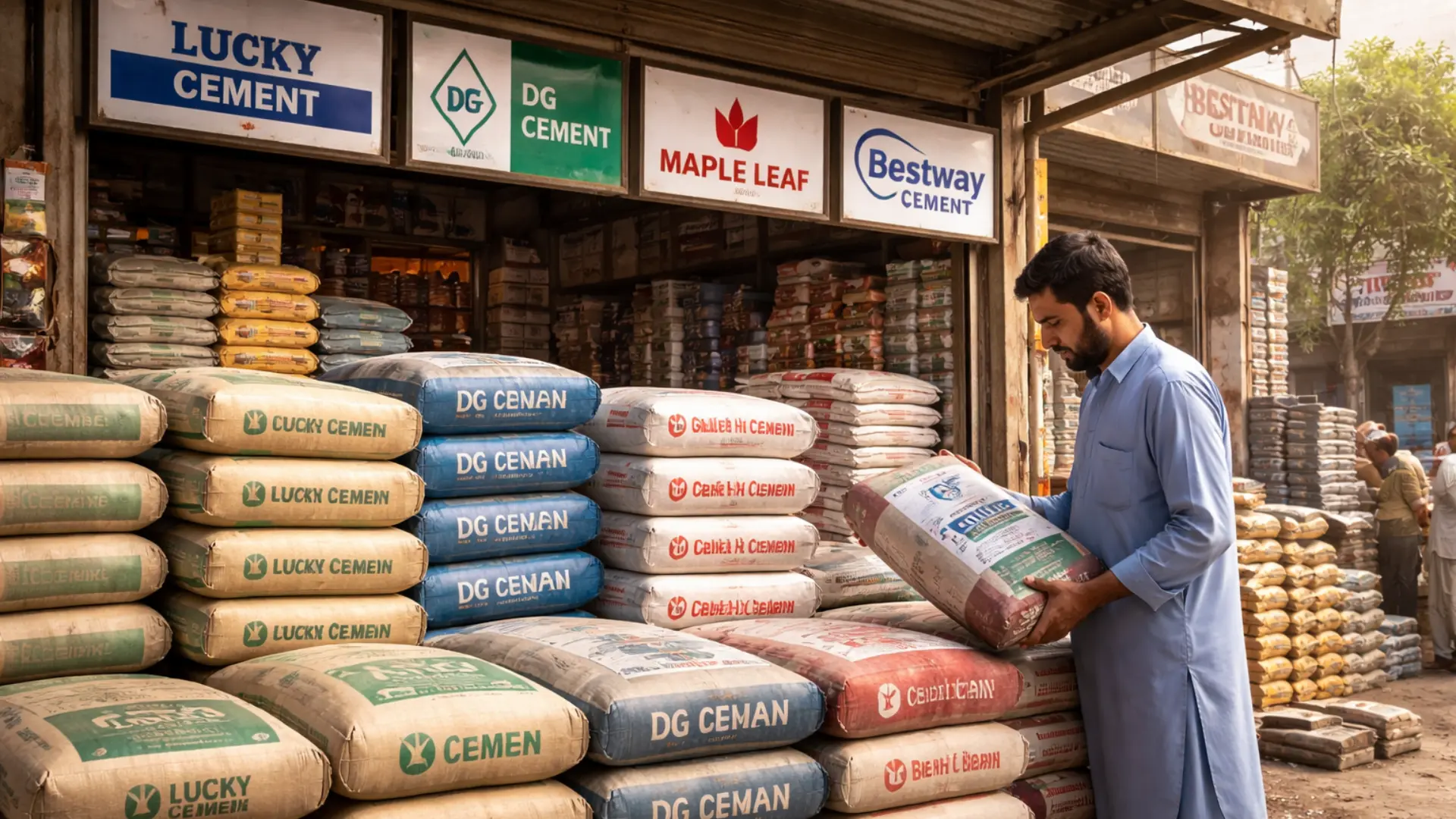
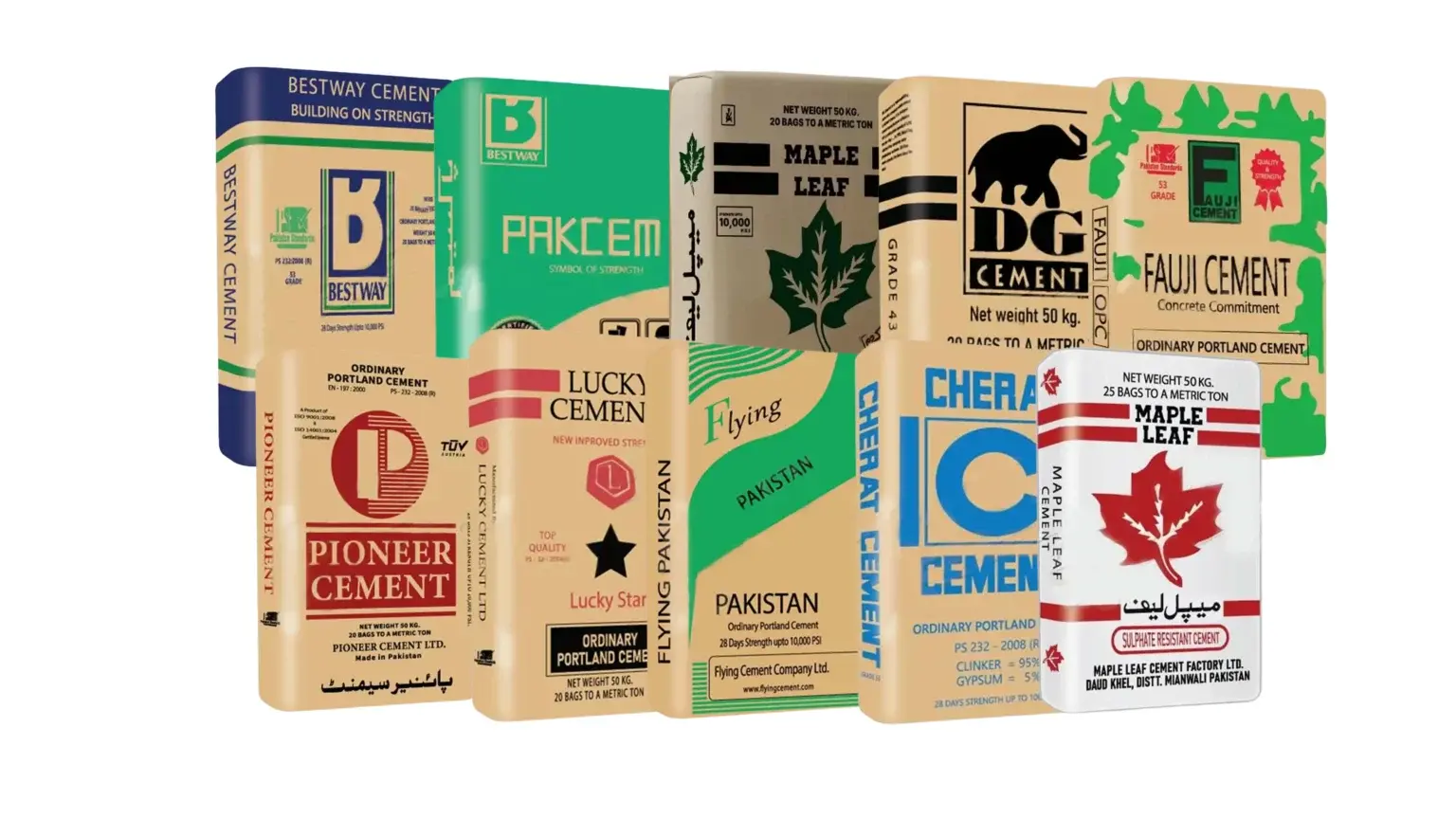
Cement Brand | Approximate Price (PKR/50 kg) | Best For |
Lucky Cement | 1,560 | Residential and commercial projects |
DG Khan Cement | 1,580 | Foundations and sulfate-resistant construction |
Maple Leaf Cement | 1,560–1,610 | High-strength and architectural work |
Bestway Cement | 1,565 | Houses and commercial buildings |
Fauji Cement | 1,560 | General construction |
Askari Cement | 1,545 | Residential construction |
The price gap between major blended cement brands is relatively small. Buyers usually pay a little more for brands with stronger market reputation, specialized cement types, or higher transportation costs.
Factors That Affect Blended Cement Prices
The cost of cement in Pakistan is not constant for the entire year. There are certain economic and industry-related factors that affect the price of cement at the retail level.
1. Cost of Fuels
High-temperature kilns used in the production of cement are fueled by coal and other fuels. An increase in fuel costs increases the cost of production and hence cement prices.
2. Transport Costs
Transportation costs play a vital role in determining the price of cement. The farther away from the place of production, the more expensive cement is likely to be in a city.
3. Cost of Raw Materials
The cost of raw materials like limestone, gypsum, clinker, fly ash, slag, and packaging materials affects manufacturing costs.
4. Government Policies
Government policies, taxes, and duties affect the cost of production and pricing.
5. Dealer Profit Margins
The dealer adds his profit margin. Therefore, the same cement brand will be slightly more expensive in other cities or even in neighboring cities.
Is Blended Cement Worth the Price?
For residential and commercial building projects, yes.
While the cost of blended cement may initially be comparable to OPC, its overall value often turns out to be higher in the long run. Blended cement offers all these advantages that can compensate for any minor discrepancies in its cost of purchase.
Greater durability
Higher resistance to chemicals
Less maintenance
Decreased cracking
Increased building life span
Environmental friendliness
When Might OPC Be Preferred?
Ordinary Portland Cement may still be suitable when:
Early strength is required.
Fast-track construction is planned.
Project specifications explicitly require OPC.
Final Thoughts
No matter whether you are building a new house, commercial construction, or a massive infrastructure development project, choosing the correct cement will be like investing in your construction's future. Rather than worrying about the cost of cement in Pakistan at present, think about its durability, environmental impact, maintenance costs, and performance. The best option available in modern construction projects, in most cases, would be the use of blended cement.
Frequently Asked Questions (FAQs)
What is blended cement?
Blended cement is a hydraulic cement made by combining Ordinary Portland Cement (OPC) clinker with supplementary cementitious materials such as fly ash, blast furnace slag, silica fume, or natural pozzolans. These materials improve durability, reduce heat generation, lower carbon emissions, and extend the lifespan of concrete structures.
What is the current blended cement price in Pakistan?
The average blended cement price in Pakistan ranges between PKR 1,500 and PKR 1,610 per 50 kg bag. Prices vary depending on the cement brand, city, transportation costs, and market conditions.
Does blended cement last longer than Ordinary Portland Cement?
In many construction applications, blended cement lasts longer than Ordinary Portland Cement because it offers greater resistance to moisture, chemicals, chlorides, and sulfate attack while reducing concrete permeability.
Is blended cement environmentally friendly?
Yes. Blended cement is considered more environmentally friendly than Ordinary Portland Cement because it uses supplementary cementitious materials that reduce clinker consumption, lower energy use, and decrease carbon dioxide emissions.
Can blended cement be used for foundations and roofs?
Yes. Blended cement is suitable for foundations, roof slabs, columns, beams, and other structural elements when used according to engineering specifications and proper mix designs.